Portfolio
Robert Bowden Design brings practical mechanical engineering experience to custom CAD design, fabrication-ready documentation, and complex mechanical system development. Our work is rooted in real-world manufacturing, installation coordination, site constraints, and deployment — not just clean-looking models on a screen.
With experience spanning project discovery, prototyping, fabrication support, trade coordination, and implementation, we support projects from early concept through final installation. Robert’s background includes mechanical design for large video display systems, sheet metal components, machined parts, welded structures, extruded profiles, vendor coordination, and fabrication-level drawing packages. He is also a Certified SOLIDWORKS Expert in Mechanical Design and holds a B.S. in Mechanical Engineering from Georgia Tech.
Freestanding Display System
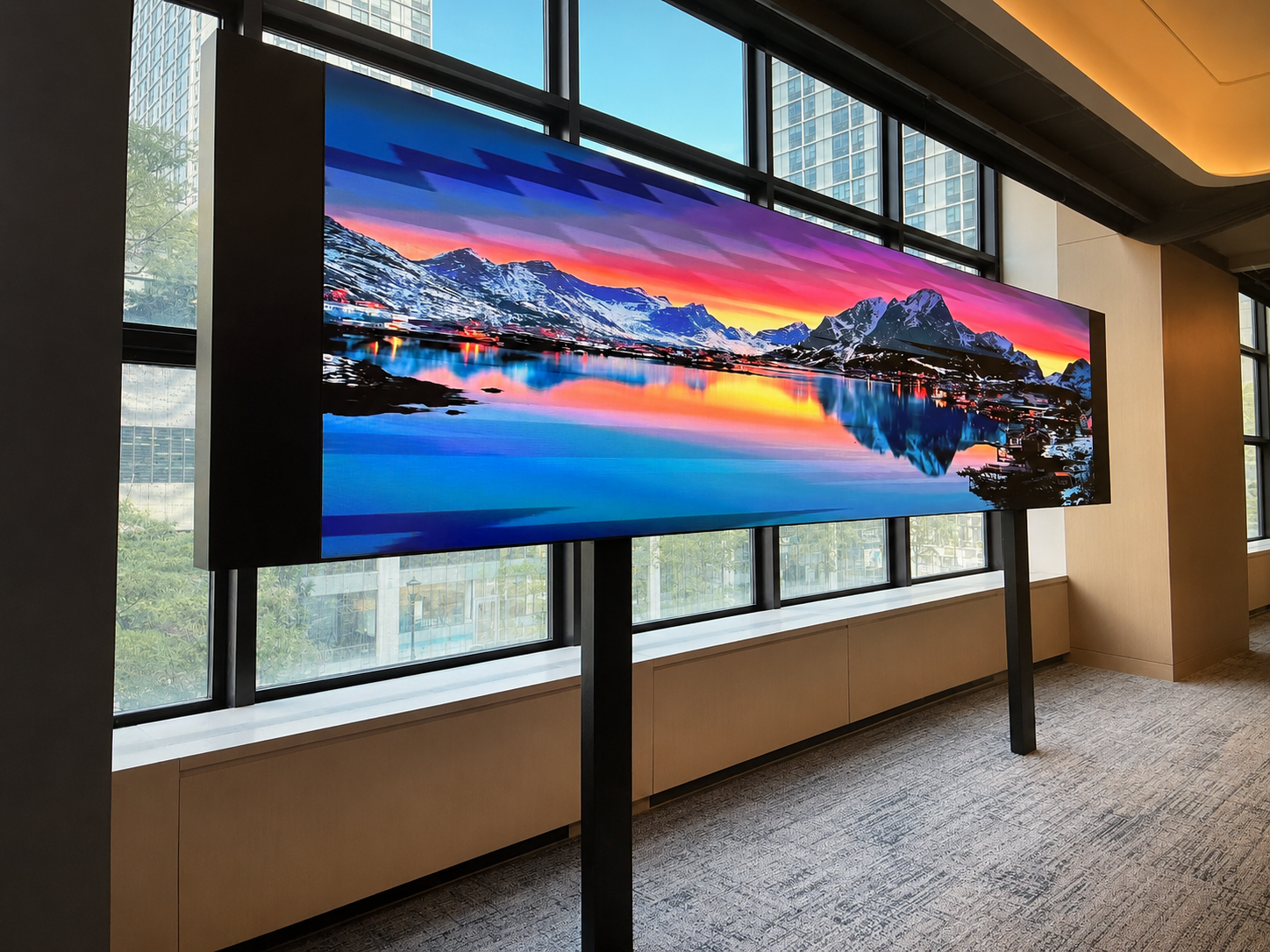
One representative project involved leading a complex freestanding display system from pre-sales through installation. The project required early coordination with the customer and architect to confirm that strict design requirements could be met before the contract was awarded.
After project approval, the work included mechanical design, cost estimation support, project management, fabrication coordination, shipment planning, and on-site installation support. The final system included more than 50 custom-designed parts and resulted in a freestanding display structure approximately 16 feet wide and 1,500 pounds, with three units produced.
This project highlights our ability to move beyond basic drafting and provide full-cycle engineering support, from concept validation to installation-ready execution.
Project focus:
Custom mechanical design, structural display support, fabrication drawings, project coordination, and installation support.
Motorized Horizontal Display System
Another representative project involved the design of a large motorized display system weighing approximately 1,000 pounds and traveling nearly 40 feet along a custom motorized track.
The system required mechanical design, control safety considerations, custom finishing details, wire management, and close coordination with multiple project stakeholders. The design had to account for field conditions, trade coordination, installation sequencing, and site-specific conflicts that affected the final layout and execution.
This project required more than simply designing a moving structure. It involved balancing motion, safety, serviceability, aesthetics, and constructability into a system that could be successfully installed and operated in the field.
Project focus:
Motorized track system, heavy display support, control safety coordination, wire management, custom finishing, site deconfliction, and field coordination.
Motorized Vertical Display System
A separate project involved a large motorized display weighing approximately 4,500 pounds and traveling roughly 50 feet vertically while suspended by two chain motors.
This system required extensive coordination with existing building steel and surrounding architectural conditions. The design process included deconflicting the display path, coordinating with field teams, and developing a mechanical solution that could move safely and reliably within the existing structure.
Projects like this require careful attention to load paths, movement clearances, support conditions, installation access, and coordination between design intent and real-world construction constraints.
Project focus:
Vertically traveling display system, chain motor suspension, existing steel coordination, field condition review, mechanical integration, and installation guidance.
Suspended Multi-Motor Display System
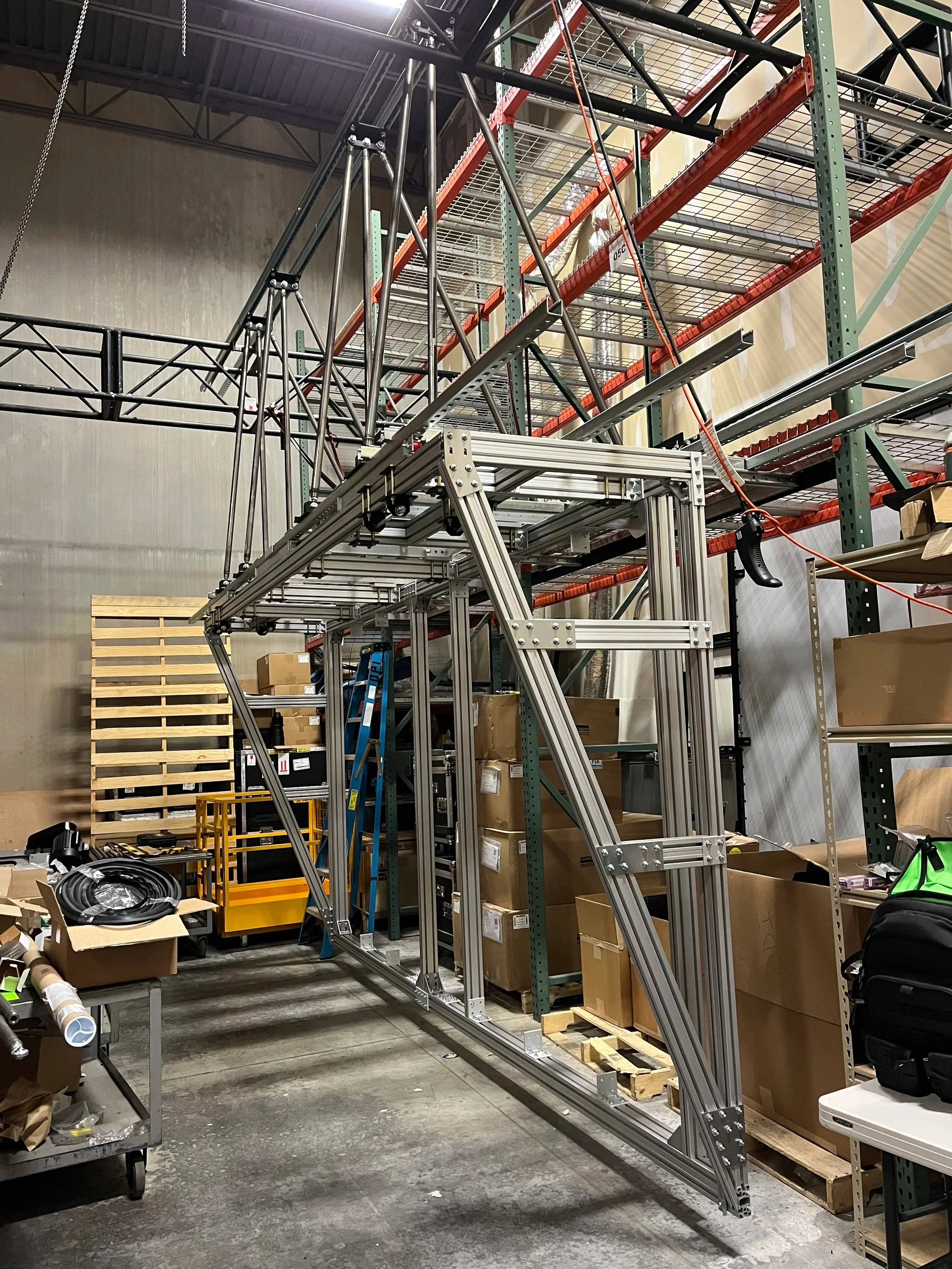
Another complex design involved a suspended display system weighing approximately 5,000 pounds and supported by three chain motors.
The project required detailed coordination with site conditions, existing steel, architectural constraints, and installation requirements. One of the key challenges was aligning the system through a constrained architectural gap with less than 2 inches of available spacing. The work included guiding the architectural team, coordinating system clearances, and helping ensure the final design could be integrated into the building as intended.
This type of project demonstrates the value of mechanical design support that understands both CAD precision and field reality. When large, heavy, custom systems must fit into tight architectural conditions, successful execution depends on clear communication, practical engineering judgment, and careful coordination.
Project focus:
Heavy suspended display system, three-motor chain support, tight clearance coordination, architectural team guidance, existing condition deconfliction, and installation-focused design.
Sliding Access Display Mechanism
A final representative project involved designing a complex sliding access mechanism for a cantilevered display system. The display weighed approximately 800 pounds and was suspended from a ceiling condition with multiple structural conflicts and coordination challenges.
The mechanism was engineered to allow front access for service while supporting the considerable weight of the display. The design required careful component selection, fabrication planning, and integration of thick sheet metal, thin sheet metal, and precision-machined aluminum components to balance strength, weight, movement, and installation constraints.
This project demonstrates the type of problem-solving Robert Bowden Design is built for: difficult site conditions, heavy assemblies, constrained installation spaces, and custom mechanical systems that need to work in the real world.
Project focus:
Custom motion system design, sliding access, cantilevered display support, structural coordination, fabrication-ready drawings, and complex mechanical integration.
Capabilities Demonstrated
Across these projects, Robert Bowden Design has supported work involving:
Full life-cycle mechanical design
Customer discovery and project scoping
SolidWorks CAD modeling and assembly development
Fabrication-level drawing packages
Sheet metal and machined component design
Vendor and fabrication coordination
Prototype iteration and first production support
Installation planning and on-site technical support
Design for manufacturability and assembly
Heavy display support systems
Motorized and moving display assemblies
Site condition review and deconfliction
Coordination with architects, trades, vendors, and field teams
Our goal is to help clients turn complicated design requirements into practical, buildable solutions. Whether the need is a one-off custom assembly, a heavy motorized display system, or a complex mechanical installation with tight site constraints, we bring engineering judgment, CAD expertise, and manufacturing awareness to every stage of the project.